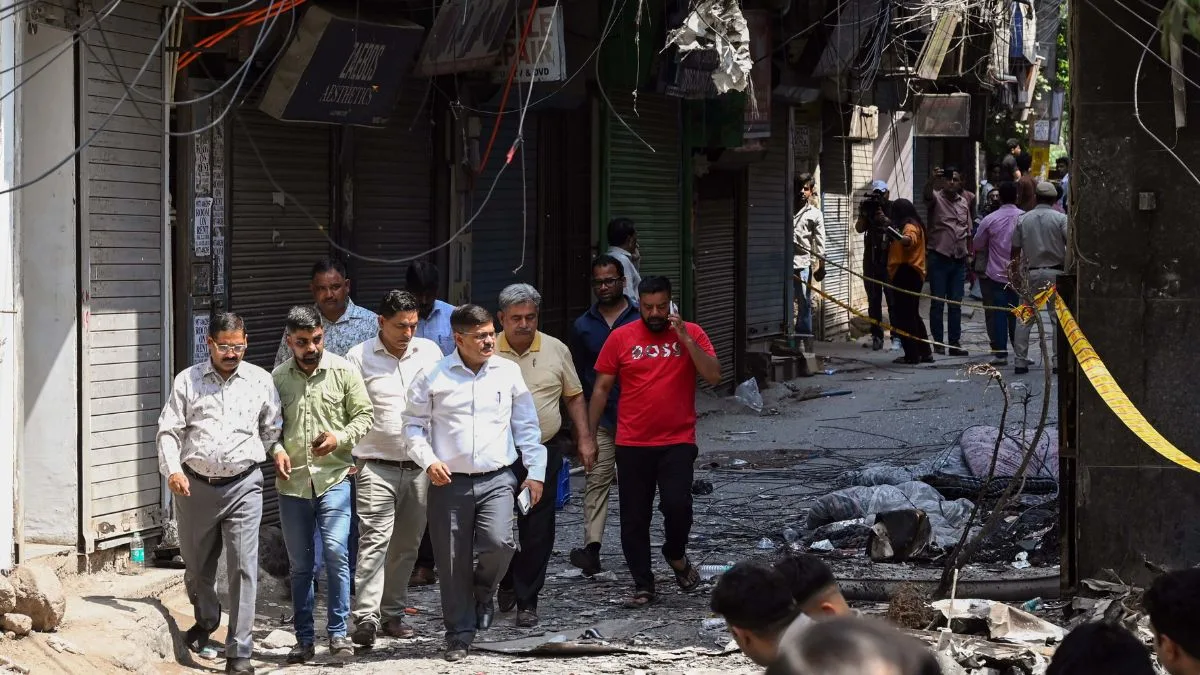
‘India worst hit by conflict’
The reverberations of the West Asia conflict are reshaping the global economy at a structural level, exposing vulnerabilities in energy security, supply chains, fiscal stability, and geopolitical finance.
Global growth is now projected to slow to 3.1% in 2026 and 3.2% in 2027, marking a slowdown from the 3.4% average recorded during 2024-25. The latest outlook also falls short of the 3.7% historical average seen between 2000 and 2019, underlining a broader loss of momentum.




Global economy on edge as US-Israel-Iran war deepens downside risks (Representational Photo: iStock)
The global economy is entering a fragile phase, with the outbreak of war in the Middle East threatening to derail growth, revive inflation pressures, and unsettle financial markets. What was shaping up as a gradual recovery is now at risk of slowing further, as policymakers confront rising geopolitical tensions alongside already high debt and weakening institutional trust.
As per the World Economic Outlook 2026 released by the International Monetary Fund (IMF), global growth is now projected to slow to 3.1% in 2026 and 3.2% in 2027, marking a slowdown from the 3.4% average recorded during 2024-25. The latest outlook also falls short of the 3.7% historical average seen between 2000 and 2019, underlining a broader loss of momentum.
Advertisement
The 2026 growth forecast has been revised down by 0.2 percentage points, while projections for 2027 remain unchanged compared to earlier estimates.
Advertisement
Economists warn that risks remain heavily tilted to the downside. A prolonged or widening conflict could further disrupt supply chains, push up energy prices, and deepen global fragmentation.
In a scenario where energy prices rise more sharply and persist, global growth could fall to 2.5% in 2026, while inflation may climb to 5.4%.
An even more severe outcome, such as damage to key energy infrastructure, could push growth down to around 2%, with inflation exceeding 6% by 2027. In such a case, the economic impact on developing economies would be nearly twice as severe as that on advanced nations.
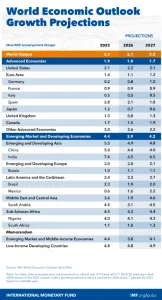
The impact of the crisis is expected to be uneven. Growth in emerging market and developing economies has been revised down by 0.3 percentage points for 2026, while projections for advanced economies remain broadly stable.
However, weaker growth and higher inflation are expected to be more pronounced in developing economies, which are more exposed to energy shocks, capital flow volatility and currency pressures.
After a period of easing, inflation is expected to edge higher again. Global headline inflation is projected at 4.4% in 2026, before moderating to 3.7% in 2027. Both figures represent upward revisions, reflecting renewed price pressures, particularly from energy markets.
The combination of slower growth and rising inflation points to a more difficult macroeconomic environment, especially for developing economies.
Multiple Pressures Add to Uncertainty
Beyond the conflict, other risks are building. These include:
Together, these factors are increasing the vulnerability of the global economy at a time when resilience is already under strain.
There are some potential positives. Faster productivity gains driven by artificial intelligence or a sustained easing of trade tensions could support growth. However, these remain uncertain and dependent on policy choices and global cooperation.
With uncertainty rising, the emphasis is shifting toward credible policy frameworks, adaptability and stronger international coordination. Governments and central banks are expected to prioritise stability while preparing for further shocks in an increasingly volatile global environment.
For now, the numbers point to a clear trend: slower growth, persistent inflation and rising risks, with the trajectory of the Middle East conflict likely to play a decisive role in shaping the global economic outlook.
Advertisement